Bedding materials · A practical guide
Silk or Feather Fill? Understanding Natural Bedding Warmth
A comforter’s warmth is not simply a matter of what is inside it. Fiber, fill structure, shell fabric, construction, bedroom conditions, and personal preference all shape how a bedding layer feels through the night. Silk and feather-based fills take different routes to comfort: one tends to drape close and light, while down and feathers can create loft and pockets of insulating air.
This guide compares those materials in practical terms, explains where eiderdown fits into the conversation, and offers a framework for weighing warmth, weight, care, and everyday use.
Warmth is a system, not a label
Two comforters marked “natural” can behave very differently on a bed. A light silk-filled layer may lie close to the body, while a lofty down comforter may hold more air between the sleeper and the room. Neither quality alone determines whether a person will feel comfortable. The surrounding conditions matter: room temperature, humidity, sheets, sleepwear, the mattress surface, and whether the sleeper tends to feel warm or cool.
It helps to think of bedding as a small climate system. Insulation slows the movement of heat away from the body. Breathability and moisture management influence whether that warmth feels dry and balanced or stuffy. The cover, stitching, and distribution of the fill affect how evenly those properties reach across the bed.
Labels such as “summer,” “all-season,” and “winter” can be useful, but they are not universal measures. Brands may use different fill weights, constructions, and testing methods. A comforter called year-round in one home may feel too warm in a heated apartment—or too light in a drafty bedroom. When comparing options, look beyond a seasonal label to the material, amount of fill, construction, dimensions, and care instructions.
Silk: a light, close-draping layer
Silk comforters are often chosen for their fluid drape and relatively low-bulk feel. Silk fibers can form a supple batting that settles closer to the bed than a highly lofted down fill. This quality appeals to people who want a gentle layer without the pronounced puffiness of a traditional duvet.
Silk’s appeal is not simply that it feels delicate. In a comforter, the fiber’s structure and the way it is layered influence how the bedding handles moisture and warmth. Many silk-filled designs are intended to provide moderate insulation while remaining light. That can make them worth considering in bedrooms that are comfortably warm, or for sleepers who dislike a heavy, raised layer.
But “silk” does not guarantee a particular temperature experience. The total weight and thickness of the fill, the density of the shell, the quilting pattern, and the room itself all change the result. A densely filled silk comforter may feel warmer than a lightly filled one. A smooth shell may also affect how the comforter moves against a duvet cover and how much air circulates around the bedding.
Care deserves attention before choosing silk. Some comforters are dry-clean-only, while others have different instructions. Cleaning methods that work for a washable cotton blanket may be unsuitable for a silk-filled insert. Check the sewn-in label and manufacturer guidance, and use a washable duvet cover to reduce the frequency with which the insert itself needs cleaning.
Feather and down: structure, loft, and insulation
“Feather fill” and “down fill” are related terms, but they do not describe identical materials. Feathers have a central quill and tend to provide more structure. Down consists of soft clusters that grow beneath the outer feathers of waterfowl; the clusters are known for their ability to trap air while remaining light. Many comforters use down, feathers, or a blend, and the proportions can shape the feel.
In a comforter, loft is part of the experience. Fluffy clusters create space that can hold still air, helping slow heat loss. A high-loft design may feel airy rather than dense, although the amount of fill and the construction determine how warm it is in use. Feather-heavy blends can feel more substantial, while down-rich fills often emphasize softness and loft. These are broad tendencies, not guarantees: fill weight, cluster quality, chamber design, and shell fabric all matter.
Some down products describe fill power, a measure associated with the loft of a given quantity of down under specified testing conditions. It can help compare down products, but it is not a warmth rating on its own. A comforter’s total fill weight, size, design, and intended use still matter. High fill power does not automatically mean that a comforter will be warmer than every lower-fill-power alternative.
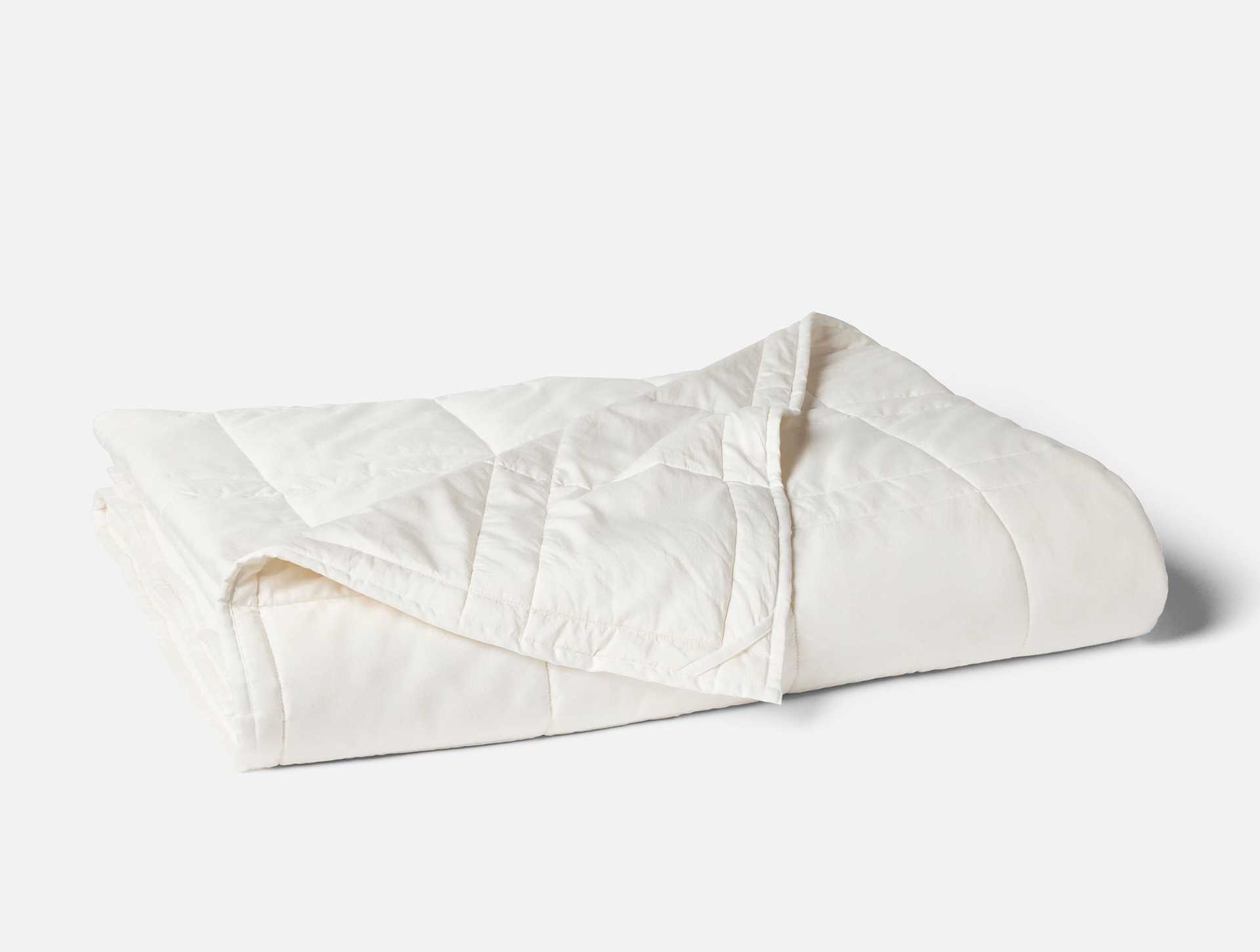
Construction helps keep the material useful across the bed. Baffle boxes create internal walls that allow down to expand, while stitch-through patterns join the upper and lower fabric layers. Each approach has trade-offs in loft, profile, and the potential for cooler lines where the fill is less deep. Even distribution matters: a comforter with thin patches can feel less comfortable than its material description suggests.
Where eiderdown fits
Eiderdown is a particular kind of down associated with the eider duck, rather than a general term for any down comforter. It is historically valued for its lightness and insulating qualities. The name can evoke the cold northern environments where eider ducks live, but a material’s reputation should not substitute for checking the actual specification of a bedding item.
When considering a product described as eiderdown, clarify what the label means in that specific context. Ask whether the fill is truly eiderdown or another type of down, how the material is sourced, what the fill quantity is, how the comforter is constructed, and what care is required. Because terminology can be used loosely in general conversation, precise descriptions and credible sourcing information are more useful than evocative names alone.
Ethical sourcing is also a separate question from warmth. Look for clear, verifiable information about the supply chain and any relevant certification, and understand what a certification does—and does not—cover. If animal-derived filling does not suit your values or needs, silk, wool, cotton, and plant- or cellulose-based alternatives provide other routes to a comfortable bed.
A reference point: organic cotton shell and down fill
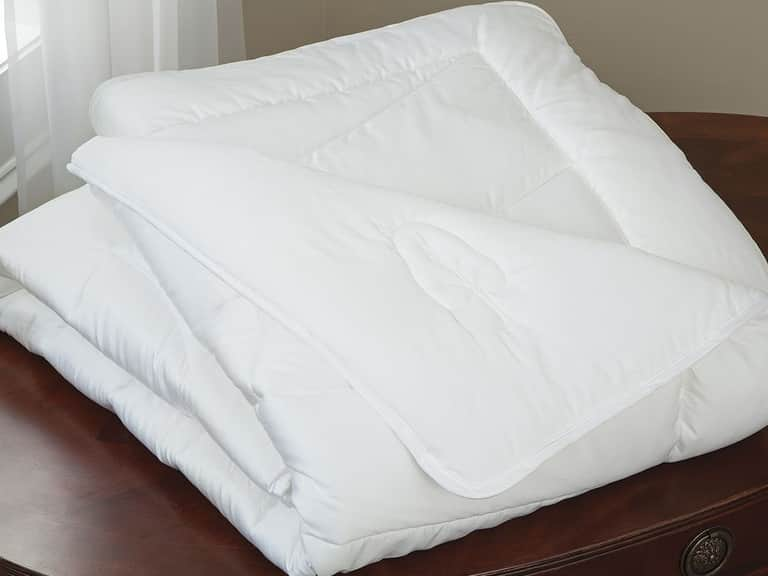
One way to make a comparison more concrete is to examine the components of a specific duvet insert. The Naturepedic Organic Down Duvet Insert is described as using 750-fill-power USA soft white duck down inside a certified organic cotton cover. Its stitch-through box construction is intended to distribute the fill and limit cold spots. It is available in lightweight and all-season options, illustrating how the same broad material category can be configured for different preferences.
This example is useful as a reference point—not as proof that down will suit every sleeper. The cotton shell, fill, construction, warmth option, and instructions for cleaning all contribute to the experience. The product information recommends spot cleaning and describes machine washing only as an emergency measure, with specific precautions. That distinction matters: a natural fill may feel appealing, but its care requirements should fit the household’s routine.
Compare this kind of down insert with silk by asking what you want the comforter to do. Do you prefer a cloud-like, lofted surface, or a lower-profile layer that falls more closely over the body? Do you want the insert to feel light in the hand, or do you prefer a little more substance? How often will you use a duvet cover, and are you prepared to follow a specialized cleaning process? Those practical questions are often more revealing than a material name in isolation.
The shell and stitching change the feel
Fill receives most of the attention, but the outer fabric is in direct contact with the duvet cover and helps shape airflow, drape, and sound. Cotton is commonly used for down-filled comforters because it can be woven tightly enough to help contain fine fill. Other fibers may create a smoother hand or a different moisture response. A soft, breathable shell can complement the fill; a dense or stiff one may make the comforter feel less fluid.
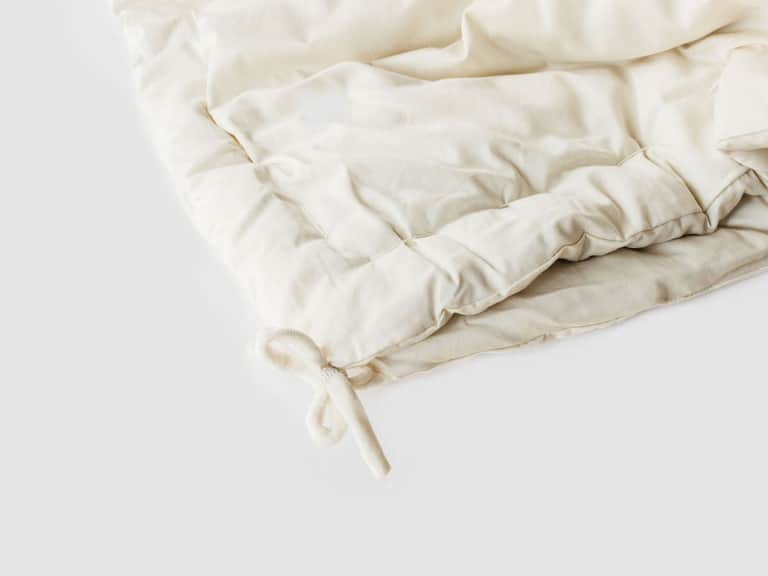
Stitching and internal compartments influence distribution over time. Box construction creates sections that help keep fill in place, while other patterns may secure the batting in a flatter profile. Corner loops or ties can connect an insert to a duvet cover, reducing bunching as the bed is made or the sleeper moves. A secure fit does not change the fiber’s inherent insulation, but it can help the bedding feel more even from one night to the next.
Size is another quiet factor. An insert that is substantially smaller than its cover can leave empty areas and collect unevenly. An oversized insert may provide more visual loft but can feel bulky. Check the measurements of both pieces rather than relying only on labels such as queen or king, which can vary among manufacturers.
How to choose for your room and routine
Start by observing your sleep environment over several nights. Consider the temperature near the bed, whether the room becomes cooler before morning, and whether you wake feeling too warm or reach for another blanket. A thermostat reading is helpful, but it does not capture every variable: drafts, ventilation, bedding layers, and individual comfort all play a part.
- If you prefer a close drape: Explore silk or other lower-profile fills, checking the stated weight and construction rather than assuming every silk comforter feels the same.
- If you value loft and light insulation: Compare down fills by both fill power and total fill weight, and examine how the chambers are built.
- If you prefer a more substantial feel: Look at feather blends or denser natural-fill designs, while considering how the added structure affects softness and drape.
- If temperatures change with the seasons: Consider a lighter insert with a separate blanket, or a design with adaptable layers, instead of trying to make one very warm comforter work in every condition.
- If care simplicity is essential: Prioritize clear, manageable laundering instructions. “Natural” does not necessarily mean machine washable.
Think about the whole bed, too. Brushed flannel sheets and several blankets can create a much warmer setup than crisp, lightweight sheets with a single insert. A comforter should be evaluated as part of the layers actually used, not as an isolated object in a product description.
A simple comparison checklist
Before deciding between silk and feather-based bedding, write down the qualities that matter most. This keeps the choice grounded in use rather than advertising language.
- Warmth: Is the room cool, moderate, or warm during sleep? Do you usually add or remove covers?
- Weight and drape: Would you rather feel a light layer close to the body or a more lofted comforter above it?
- Fill details: Is the comforter silk-filled, down-filled, feather-filled, or a blend? Are quantities and proportions stated?
- Construction: Are there baffles, sewn-through boxes, quilting, or ties that help keep the fill even and secure?
- Cover fabric: What is the shell made of, and does its texture and care profile suit your preferences?
- Maintenance: Can it be washed at home, or does the maker recommend spot cleaning or professional care?
- Sourcing: Are material origins and any ethical or environmental claims explained clearly?
- Fit: Do the comforter and duvet cover dimensions match closely enough to prevent shifting and empty corners?
If the specification leaves important questions unanswered, that uncertainty is itself useful information. Avoid inferring warmth, washability, or sourcing practices from a single word such as “premium,” “natural,” or “hypoallergenic.” Seek concrete details, and follow the care label once the item is in use.
Care that protects the fill
A duvet cover is a simple first layer of protection. It can take on much of the everyday contact and is generally easier to remove and launder than the insert. Regularly airing bedding in a dry, well-ventilated space can help it feel fresh, but direct sunlight, damp weather, and product-specific cautions should be considered. Follow the manufacturer’s advice rather than treating every natural fill alike.
When a comforter needs cleaning, read its label before choosing a method. A large comforter may not move freely in a household washer, and an unsuitable cycle can strain seams or leave the center damp. For down, thorough drying is particularly important because moisture trapped in the fill can cause clumping and lingering odor. Silk may have different sensitivities, so instructions for a down duvet should not be transferred to a silk one.
Before storing a seasonal comforter, make sure it is completely dry. Use a breathable fabric bag or another storage method recommended by the maker. Sealed plastic can trap moisture, especially if the bedding was packed away before fully airing. Store it in a clean, dry place where it will not be compressed beneath heavy objects for long periods.
The broader family of natural fills
Silk and down are not the only choices. Wool is often selected for its ability to manage moisture and provide a more consistent, less lofty form of warmth. Cotton batting tends to have a flatter, familiar feel. Lyocell, including fibers commonly marketed under the TENCEL brand, is made from processed wood cellulose and is used in bedding for its smooth hand and moisture-management qualities. These materials have distinct production and care profiles, and no single one is universally best.
That wider context can prevent a false choice. Someone who dislikes the buoyant loft of down but wants a breathable layer may prefer to investigate wool or cellulose-based fills. A person who likes a soft, lightweight drape may find silk appealing. Another sleeper may care most about household washability, animal-derived materials, or how the comforter behaves in a humid room. The right comparison begins with those needs, then moves to specific construction details.
Materials also vary within their categories. A wool comforter’s fill weight and quilting differ by design; a silk insert may be more or less substantial; down quality and chamber construction vary; and shell fabrics can change the way every fill feels. Descriptions should therefore be read as a set of clues, not as a substitute for the full specification.
A calm conclusion: choose the experience, then verify the details
Silk and feather-based bedding offer distinct paths to warmth. Silk is often associated with a light, close drape; down can create airy loft and insulation, while feather blends may add structure and weight. Eiderdown is a specific and historically valued form of down, but the name alone does not tell you how a particular comforter will perform or how it was sourced.
The most reliable decision combines tactile preference with practical information. Consider your bedroom climate, the layers already on the bed, the fill and its quantity, shell fabric, construction, sourcing, and care requirements. A product such as the Naturepedic organic down insert can help illustrate how shell, fill, and construction come together, but it should be judged against your own conditions and routines.
Comfort is ultimately personal. Look for precise descriptions, make room for seasonal adjustment, protect the insert with a suitable cover, and maintain it according to its instructions. The aim is not to find a material with the grandest name. It is to create a steady, breathable layer that feels right in the room where you sleep.
Frequently asked questions
Is silk warmer than down?
Not automatically. Warmth depends on the fill quantity, construction, shell, and bedroom conditions. Silk is often chosen for a lighter drape, while down is valued for loft, but individual comforters vary. Compare full specifications rather than relying on the material name alone.
Does higher fill power always mean a warmer comforter?
No. Fill power describes the loft of a quantity of down under specified testing conditions; it does not state the comforter’s total warmth by itself. Fill weight, size, construction, and intended use also influence the result.
Is eiderdown the same as feather fill?
No. Eiderdown refers specifically to down associated with the eider duck. Feather fill generally refers to feathers with a central quill, while down consists of soft clusters. Product descriptions should identify the actual fill clearly.
Can natural-fill comforters be machine washed?
Some can, but many require specific care or professional cleaning. Check the label and manufacturer instructions for the exact comforter. Never assume that a silk, wool, feather, or down insert can be washed in the same way as ordinary cotton bedding.